Counter notes
Restaurant chair weight capacity ratings without the guesswork
A capacity figure is useful when it is attached to the right chair. Trouble starts when a number from one listing becomes the rule for a whole material group, or when the weight of the chair itself is mistaken for the load it can carry.
Restaurant chair weight capacity ratings should be checked model by model. Start in the chair collection, find the labeled capacity field, and keep the product reference with it. Read the instructions and any stated conditions before using the figure in a buying decision. Keep the source page or document with the selected version so the next person reviewing the order can follow the same evidence.

Open diagram at full size (new tab) ↗
Read the diagram in text
A three-step diagram: Read the right field, Item weight and capacity are different figures.; Check the exact model, Keep conditions and any evidence with its version.; Inspect the condition, A stated rating does not replace maintenance..
- CAFE BUYING NOTES
- 1
- Read the right field: Item weight and capacity are different figures.
- 2
- Check the exact model: Keep conditions and any evidence with its version.
- 3
- Inspect the condition: A stated rating does not replace maintenance.
- Keep capacity, permitted use, and any certification evidence separate.
- Keep capacity, permitted use, and any certification evidence separate.
Separate item weight from stated capacity
Item weight describes the furniture itself. Capacity describes a load rating stated for that product. They answer different questions and should stay in separate columns when you compare chairs.
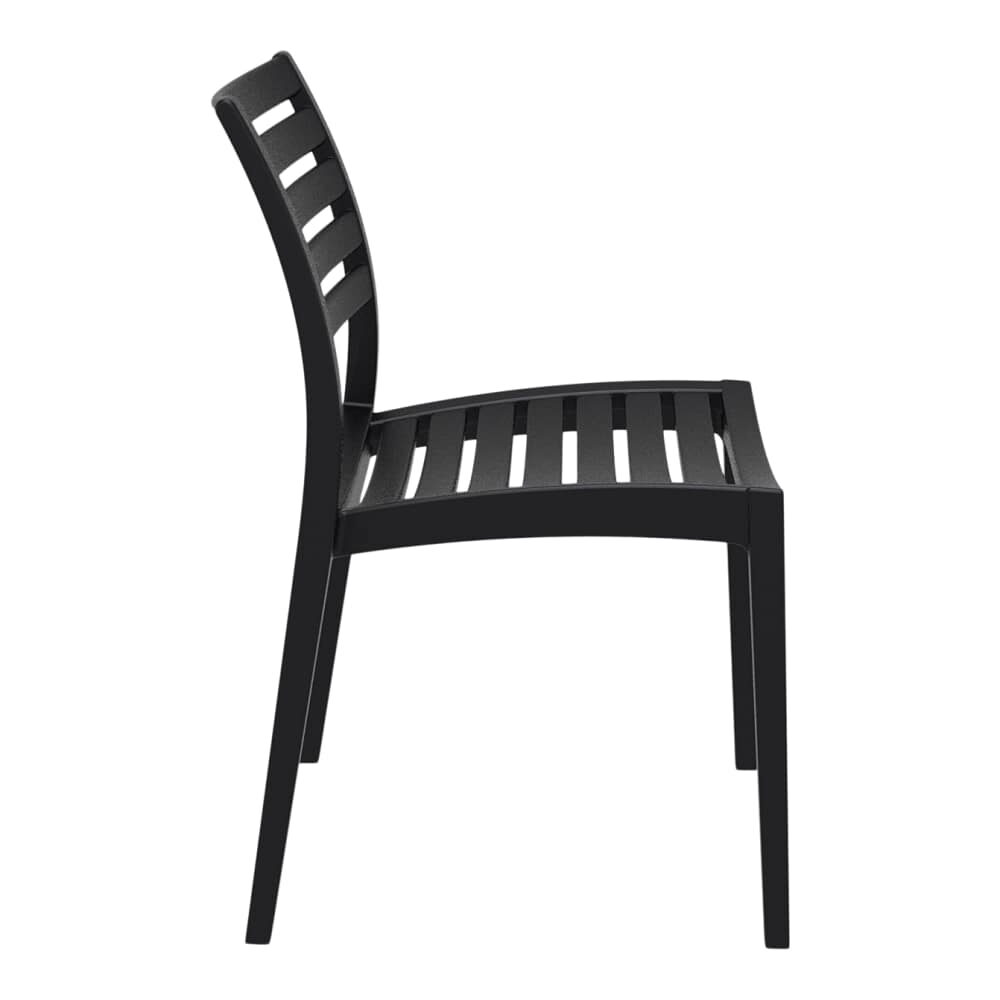
The resin side chair lists an item weight of 10 lbs and a weight capacity of 400 lb. The steel chair with a copper-vein finish lists 12 lbs for item weight and 500 lb for capacity. Use the labeled fields rather than trying to infer one figure from the other.
Those examples also have different use settings. The resin model lists indoor and patio use; the steel example lists indoor use. A larger capacity figure does not move an indoor chair outside or change its cleaning instructions. The permitted setting remains a separate part of the choice.
The chair buying guide helps organize the broader comparison. Include size, configuration, use setting, and the stated rating without turning any single entry into a description of everything the chair can do.
Keep the rating with the selected version
A product page can contain several seat or finish choices. Check whether the stated capacity applies to the configuration you intend to order. When the scope is unclear, ask for confirmation and keep the answer with that version.
Read the accompanying conditions. Use the furniture as directed, and follow the instructions for assembly and maintenance. A rating is not a reason to overlook a loose part, damaged frame, or unsuitable use. Take a chair with an unresolved defect out of service until it has been properly assessed.
For another example, the aluminum bamboo-look armchair lists 500 lb capacity and patio use. That information belongs to this model. It should not be copied across every chair in the patio seating range, even if several have similar-looking frames.
When an order covers several chair types, keep their information in separate rows. Include the selected options and the intended location, so a later change is easy to spot. If the model changes during review, revisit its capacity and use details before accepting the replacement rather than carrying the old row forward.
Keep any missing figure visible. If the selected page lacks a capacity entry needed for your brief, ask for it before completing the purchase. Do not fill the gap with a number from a nearby model or a broad claim about metal, wood, or resin.
Ask what a certification statement actually covers
A listed capacity and a certification statement are separate pieces of information. If a project requires a particular test or certification, ask for evidence identifying the exact model and applicable version. Read what the document covers instead of assuming the presence of a number means a particular test was performed.
Keep the document name, product reference, and any scope limitations together. A statement for a different model or component needs checking before it is used for the chair you are buying. Where a requirement comes from a project brief, have the person responsible for that requirement review the evidence.
The metal chair selection includes varied constructions. Use the material label to browse, then ask about the testing evidence for the chosen model. Treat each selected model's information as its own record.
Avoid testing capacity yourself by loading a chair or asking someone to push it beyond normal use. Follow the documented instructions and obtain the relevant evidence from the product source. An improvised load trial can damage the item and does not replace a defined test procedure.
Count rated chairs individually, not as pooled capacity
Say you order 12 chairs of the resin model above, each with a listed 400-lb capacity. Multiplying 12 by 400 gives 4,800 pounds arithmetically, but that total is not a usable room rating or a way to share a load between chairs. Each chair retains its own stated conditions and intended use.
Use the order count to check delivery and inventory instead. Confirm that all 12 items are the selected model and configuration. If a replacement is substituted or a different version arrives, verify its details rather than carrying the original rating over automatically.
Keep the individual model information in a cafe plan and retain the supporting product documents with the order. Label any spare parts by the model they fit. A repair that changes a component needs the appropriate parts and instructions, not a visually similar substitute chosen from a drawer.
The chair ownership-cost article helps track upkeep separately from purchase cost. A capacity figure does not tell you how many years a chair will last, how often a fitting will need attention, or what the room's maintenance costs will be.
Put condition checks into the daily routine
Look for visible damage, loose fittings, and a chair that no longer rests correctly before putting it into the day's seating arrangement. Use the product's maintenance instructions for any adjustments. The replacement decision guide explains how condition observations can lead to repair or replacement questions.
Cleaning matters too. Follow the material care guidance and the instructions for the actual finish or upholstery. Keep indoor furniture indoors and apply the appropriate seasonal care to outdoor pieces. A rating does not remove those use conditions.
Ask through contact when a rating, configuration, or repair detail is unclear. Include the model and the question you need answered. Before approving the order, check the ordering steps against the selected versions so the capacity information you reviewed belongs to the chairs that will actually arrive.